
How to Choose the Right Bath Towels for Your Home
Learn how to compare towel material, weight, weave, size, drying time and care so you can choose comfortable bath towels for every bathroom.

Choosing a bath towel seems simple until you begin comparing fibres, weights, sizes and finishes. The right towel should feel comfortable, absorb water well and dry properly between uses. It should also suit your climate, laundry routine and available storage.
To understand how to choose bath towels, begin with daily life rather than appearance alone. Consider who will use them, how often you wash, where they will hang and how much drying time your bathroom allows. These practical details usually matter more than an impressive label.
Start with the way your household uses towels
A towel that works beautifully in one home may feel inconvenient in another. A thick, enveloping towel can be pleasing after an evening bath, yet it may take longer to dry during a humid monsoon. A lighter towel often suits busy mornings, frequent washing and compact bathrooms.
Before comparing products, ask a few simple questions:
- How many people will use the bathroom each day?
- Will each person have a separate towel and hanging space?
- Does the room receive enough ventilation or sunlight?
- How often do you normally run a laundry load?
- Do you prefer a substantial wrap or a lighter, quicker-drying feel?
For a family bathroom, ease of care may take priority. In a guest bathroom, presentation and coordinated sets may carry more weight. Meanwhile, a gym bag or travel kit calls for something compact and easy to dry. Choose for your routine first. Softness in the shop matters, but drying speed, wash frequency and hanging space shape how a towel feels over time.
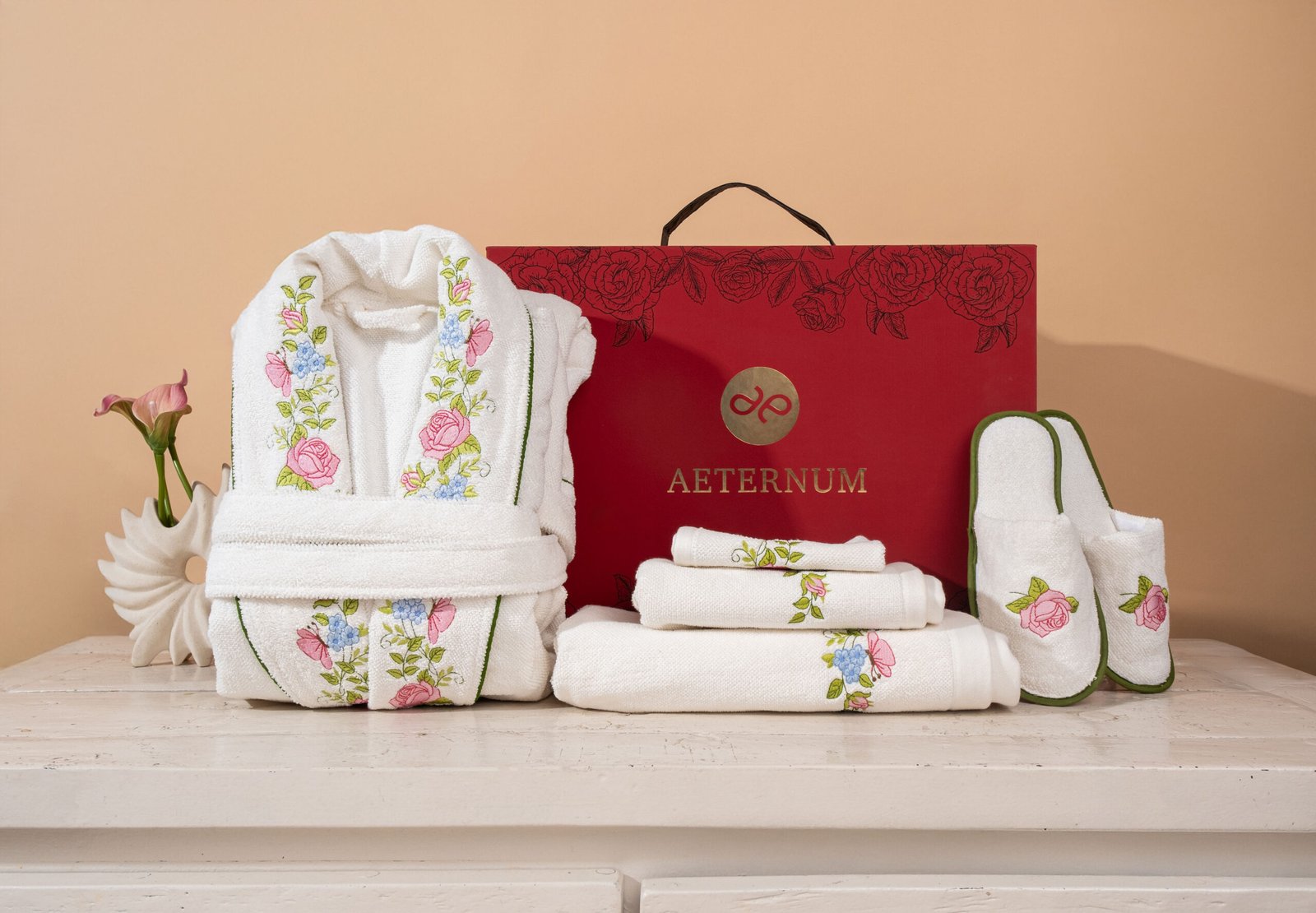
How to choose bath towels by material
Cotton remains a familiar choice for bath linen because it is naturally absorbent and comfortable against the skin. Cotton Incorporated also notes that cotton is widely suited to towels because of its softness, absorbency and durability. You can read its broader home textile buying guidance when comparing fibre and construction terms.
Look beyond the fibre name
Terms such as Egyptian cotton or Turkish cotton may suggest a certain character, but the name alone does not guarantee a better towel. Yarn quality, fibre length, spinning, weave and finishing all affect the final result. Therefore, judge the whole towel rather than relying on one phrase on the label.
Run your hand across the surface. The loops should feel even and reasonably dense, without large bare areas. Check the edges and hems for tidy stitching. Loose threads, uneven borders or distorted corners can indicate that the towel may not hold its shape as well through regular washing.
Understand blends before buying
Some towels combine cotton with synthetic fibres. A blend may reduce drying time or change the feel, but performance differs by construction. Read the fibre-content and care labels carefully. Avoid assuming that every blend will behave in the same way.
Compare towel weight without chasing the highest number
Towel weight is often expressed as grams per square metre, or GSM. In general, a higher GSM indicates a denser towel with more material in the same area. It may feel fuller and absorb more water, though it can also take longer to wash and dry.
Lower or medium weights can be useful in warm Indian climates, especially where bathrooms remain humid. They are often easier to hang, store and launder. Heavier towels may suit air-conditioned homes, spacious bathrooms or anyone who enjoys a more substantial wrap.
| Towel character | Often suits | Consider before buying |
|---|---|---|
| Lightweight | Frequent washing, travel, humid rooms and quick changes | May feel less enveloping than a dense towel |
| Midweight | Everyday family use and a balance of comfort and drying time | Performance still depends on fibre and construction |
| Heavyweight | Plush comfort, spacious bathrooms and slower-paced routines | Needs more drying time, storage space and laundry capacity |
GSM is helpful, but it is not a complete quality score. A well-made medium-weight towel may outperform a poorly constructed heavier one. When possible, compare weight alongside loop density, stitching, absorbency and the manufacturer’s care guidance.
Choose a size that fits both body and bathroom
A bath towel should wrap comfortably without becoming awkward to wash or hang. Before ordering, check the listed dimensions rather than relying only on labels such as “bath towel” or “bath sheet”. Sizes can vary between brands and collections.
A larger bath sheet offers more coverage, which some people prefer after a shower. However, it also occupies more rail space and washing-machine capacity. Standard bath towels are often easier for everyday family use. Hand towels, face towels and bath mats should be selected according to their specific purpose rather than treated as smaller substitutes.
Measure your towel rail or hook area before purchasing a full set. Towels need room to open out and release moisture. When several thick towels overlap on one rail, even a good fabric may remain damp for too long.
Consider colour, detailing and everyday coordination
Bath towels occupy a large visual area, so colour affects the mood of the room. White and soft neutrals can create a clean, quiet look. Deeper shades may feel warmer and can be practical in high-use bathrooms. Gentle greens, blues and earth tones often sit comfortably beside stone, wood and neutral tiles.
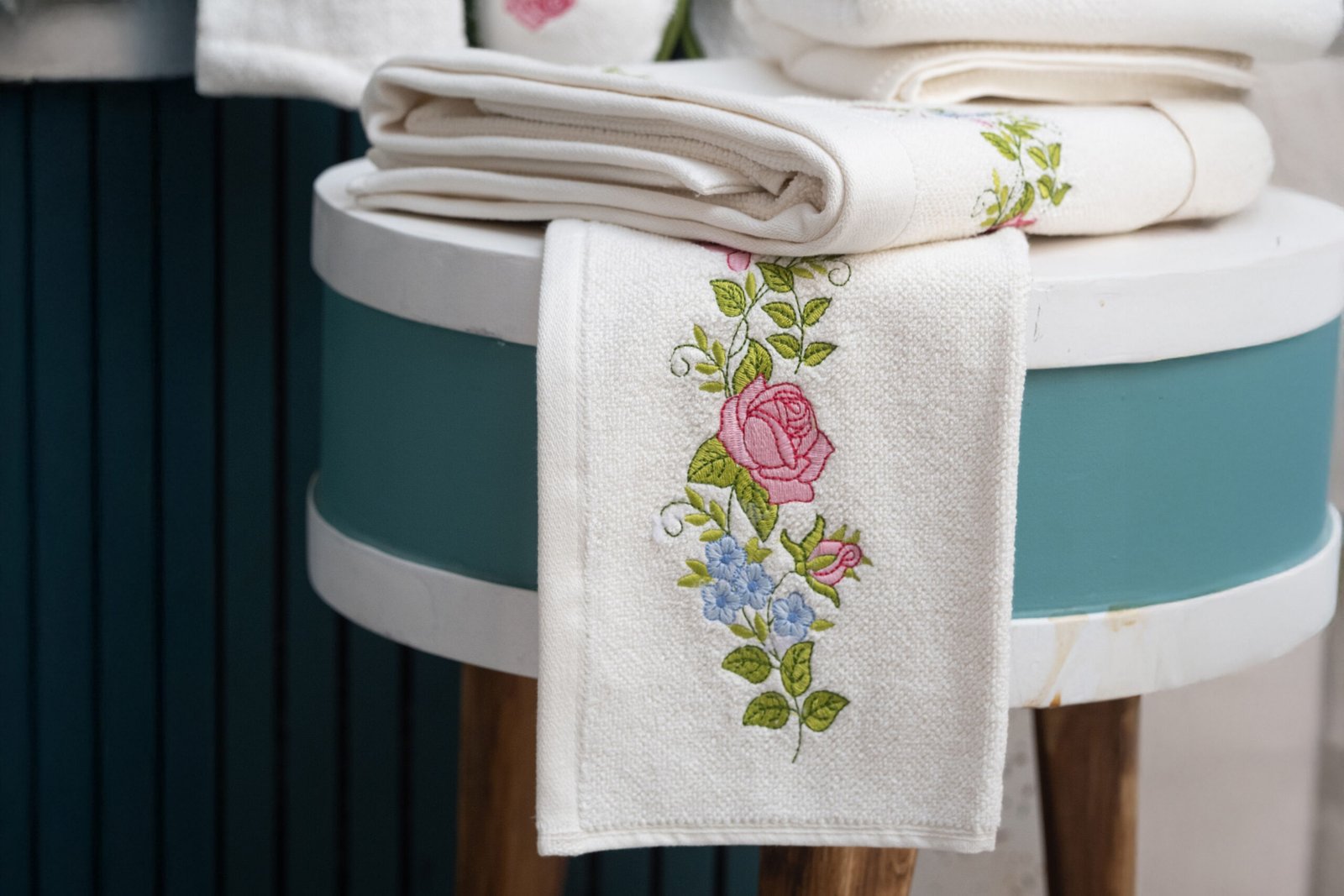
Decorative borders or embroidery can make a towel feel more personal. Examine how the detail is placed, particularly on the area used for drying. A thoughtful design should not make the main surface stiff or uncomfortable.
For a cohesive bathroom, choose a small palette rather than matching every item exactly. One base shade and one accent colour are usually enough. You can explore Aeternum Living’s bath linen collection for coordinated options, or browse the wider home and gifting collection.
Check absorbency, drying time and finish
A new towel can feel exceptionally smooth because of finishing treatments used during production. That first touch does not always show how it will absorb after washing. Whenever the product guidance allows, wash new towels before their first use.
Terry towels use raised loops to increase the fabric’s surface area. Even, open loops generally provide a useful balance of contact and absorbency. CottonWorks describes terry as a pile construction with yarns projecting from the fabric surface and also notes that textile absorbency can be measured through standard test methods.
At home, practical signs matter most. A suitable towel should:
- take up water without repeated rubbing;
- feel comfortable rather than coated or slippery;
- release moisture while hanging between uses;
- retain reasonably even edges after laundering;
- avoid excessive lint once the first few washes are complete.
A small amount of lint from a new towel can be normal. The American Cleaning Institute notes that new towels may shed lint in the wash, which is another reason to launder them separately at first.
Plan for care before committing to a set
The easiest towel to live with is one that fits your normal laundry habits. Always follow the attached care label because dyes, trims and finishes may need specific treatment. Separate light and deep colours where appropriate, use the recommended amount of detergent and avoid overloading the machine.
After bathing, spread the towel fully on a rail rather than leaving it folded, bunched or on the floor. The American Cleaning Institute advises hanging towels to dry between uses and washing bath towels after three to five normal uses. Its laundry guidance offers a useful general reference, though households may need to wash more often in humid conditions or during illness.
Before buying several pieces, try one towel where possible. Wash and use it a few times. This simple test reveals more than showroom softness: you will learn how it absorbs, dries, sheds and fits your bathroom.
A simple bath towel buying checklist
When comparing your final options, review these points:
- Choose a fibre and construction that feel comfortable against the skin.
- Match towel weight to your climate, ventilation and laundry routine.
- Confirm the exact dimensions and available hanging space.
- Inspect loops, hems, corners and decorative details.
- Read the fibre-content and care labels before purchase.
- Select colours that work with the bathroom and your washing habits.
- Buy enough towels to allow each one to dry fully between uses.
Ultimately, learning how to choose bath towels is about finding balance. The right towel feels pleasant, dries effectively and settles naturally into your household routine. Choose with daily use in mind, and even a small bathroom ritual can feel calmer and more considered.
Bring thoughtful comfort into your bathroom
Discover bath linen and considered home essentials designed for everyday rituals.Explore Aeternum Living